A method of selectively laser patterning thin layers to form flexible implantable devices
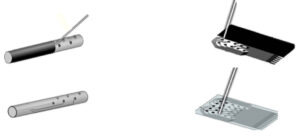
Applications: Implantable devices for stimulation
Features
Benefits
1-2µm precision
Allows for patterning of very thin layers without damage caused adjacent layers. For example, removal of resistant polymer materials from on top of more susceptible thin metal films, or creation of microfluidic channels.
Fabrication out of 2D plane
So curved surfaces or 3D structures can be pattered.
No requirement for toxic chemicals
Making the process less hazardous for the operator and better for the environment.
Rapid processing
Easy to implement design changes and prototype multiple versions that previous would have required separately manufactured masks