CD61–CD103 Immune synapse platform: unlocking potent, tumour-selective T-cell responses

Image from Licence Details: CD61–CD103 Immune synapse platform: unlocking potent, tumour-selective T-cell responses
Applications: Engineered T-cell therapies (CAR-T, TCR-T, TIL therapy), antibody therapeutics, combination immunotherapy, biomarker-based patient selection, companion diagnostics

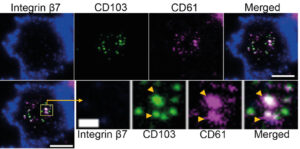
Figure legend: Representative synapse images of integrin β7, CD103, CD61 and merged, of a cancer-specific CD103+ TCR-T cell at 10 min after synaptic formation. Enlarged green box shows zoomed-in synaptic microcluster images of CD103 and CD61 colocalisation, but not integrin β7.

A CD61–CD103 immune-synapse mechanism recruits CD61 to the cSMAC with CD103 to potentiate TCR signalling and effector functions, yielding more cytotoxic, less-exhausted TILs and improved tumour control in preclinical models. IP covering engineered T-cell products (incl. CAR/TCR), agents (incl. antibodies) that modulate CD61–CD103, and diagnostic/predictive assays for CD61⁺CD103⁺ TILs. Unconventional human CD61 pairing with CD103 promotes TCR signaling and antigen-specific T cell cytotoxicity | Nature Immunology


Features Benefits
  • CD61 (integrin β3) transiently pairs with CD103 (integrin αE) at the immune synapse’s central supramolecular activation cluster (cSMAC) and co-localizes with the T-cell receptor (TCR)
  • Focuses activation exactly where tumour recognition occurs supporting stronger, more selective anti-tumour responses
  • CD61 modulates proximal TCR signalling: Reducing CD61 lowers phosphorylation of ZAP70 and PLCγ1 via Lck
  • A defined control point to tune T-cell activation enabling deeper and more durable patient responses
  • CD61⁺ tumour-infiltrating lymphocytes (TILs) show higher cytolytic molecules (granulysin, granzyme B/M), stronger degranulation (CD107a), and increased cytokines/chemokines (interferon-γ, tumour necrosis factor, CCL5, XCL2); blocking CD61 reduces key readouts ex vivo
  • Delivers a more potent anti-tumour state and provides measurable biomarkers for product
  • In vivo and clinical signal: adoptive transfer of CD61⁺ T cells slows xenograft tumour growth; a CD61^hi^CD103⁺ CD8⁺ CD3⁺ signature correlates with improved overall survival in TCGA datasets
  • Preclinical efficacy plus human-dataset association supporting translational relevance and potential impact on patient outcomes
  • Tumour access and specificity: CD61⁺CD103⁺ CD8⁺ cells are enriched within tumour islets and are more likely to carry the tumour-reactive CD103⁺CD39⁺ phenotype
  • Better on-target localisation that may limit collateral damage while enhancing tumour killing

Patented & available for:

  • Licensing
  • Co-development
  • Consulting
Request more information
about this technology

Back to Technologies Available

Sparks Background Image

Ready to get in touch?

Contact Us
Sparks Background Image
© Oxford University Innovation